Some of the photos from our Bug Day in September 🙂

Some of the photos from our Bug Day in September 🙂
It was great to see all the new faces on our Feb 26th training day! Our teams are now a mix of experienced citizen scientists and new students learning the ropes 🙂
It was a bit chilly out there, but after a brief introduction and having the scene set by Dr. Marc Schallenberg from the University of Otago, the students got stuck into their regular monitoring. And what a day to begin- with Cyanobacteria still in bloom at Site 1 (Domain Hall).. It was instantly obvious why we were all there and how important it is to get a handle on the health of Tomahawk Lagoon.
Results at a glance (compared with previous sampling date)-
Site 1 Algal bloom still active.
Chlorophyll a very high in both lagoons
E. coli increased and all Sites exceeded guidelines
Nitrogen greatly decreased from 2 Feb, but still exceed guideline values at S1-3
DRP (dissolved reactive phosphorus) lower at S4-5 and higher at S1-2. All exceed guideline values
Dissolved Oxygen S1 very low, S2 low – this makes it hard for critters and fish to survive
Check out our Results page for the most recent results and graphs
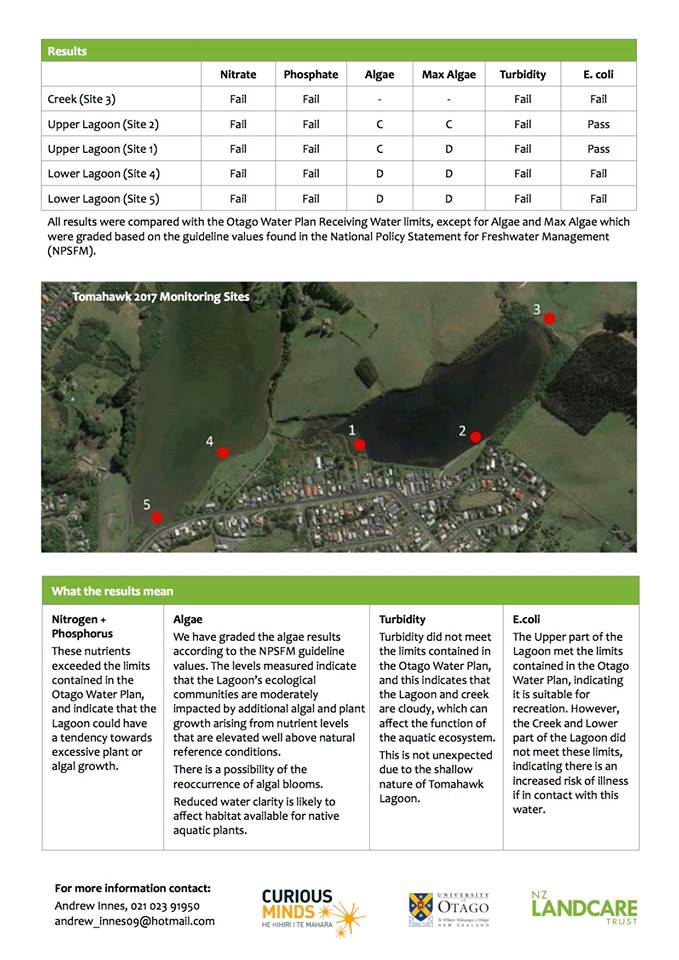
We presented our Water Quality report card for the lagoon at our ‘Reporting Back’ day on December 9th. Check out the report card below and download from the link provided:

What a cold, grey day! But that didn’t stop the teams from Otago Girls’ and John McGlashan heading out into the chilly lower lagoon to collect pelagic (in the water column) and benthic (in/on the sediment) samples of macroinvertebrates from their sites.
 Tomahawk Lagoon Citizen Science Team